Design Research / Case study

A connected product launch system

I developed an academic launch strategy that connects audience research, product information, print, digital communication and events within a manageable workflow.

Role
Individual research & design
Institution
IIE Vega
Project
2023
Context
Individual academic project
In this case study

2023 proposal · 2026 presentation

A launch is a connected system.

Four phases bring design, product information, print and events into one repeatable process.

  1. Prepare & launch

    Select product information, create supporting design and coordinate digital teasers and newsletters.

  2. Print & distribute

    Develop catalogues and brochures, coordinate print production and prepare event distribution.

  3. Connect at events

    Bring samples and guides into product conversations, supported by clinical and event teams.

  4. Review & improve

    Review delivery and customer feedback, then carry useful adjustments into the next launch cycle.

Academic strategy proposal. This sequence presents the original plan; implementation results were not assessed.

Open the full diagram (opens in a new tab)

The design question.

How could a small design team introduce new products coherently while supporting routine communication, customer education and events? Using Jehu Industries as the workplace context, the project examined the work behind a consistent customer experience.
My contribution and the project context.

Independent project research, organisational and audience analysis, communication strategy, workflow planning and presentation.

An individual IIE Vega Solution Design assessment using Jehu Industries as its case context. Submitted in December 2023. The strategy is presented as an academic proposal, with a new portfolio diagram prepared in 2026 from the original work.

From research to a considered proposal.

Understand the whole design workload

The research mapped product and packaging design, communication, events, longer term development and quality documentation. A SWOT analysis connected the breadth of this work with limited team capacity, making coordination and prioritisation central design constraints.

Connect audience needs with communication

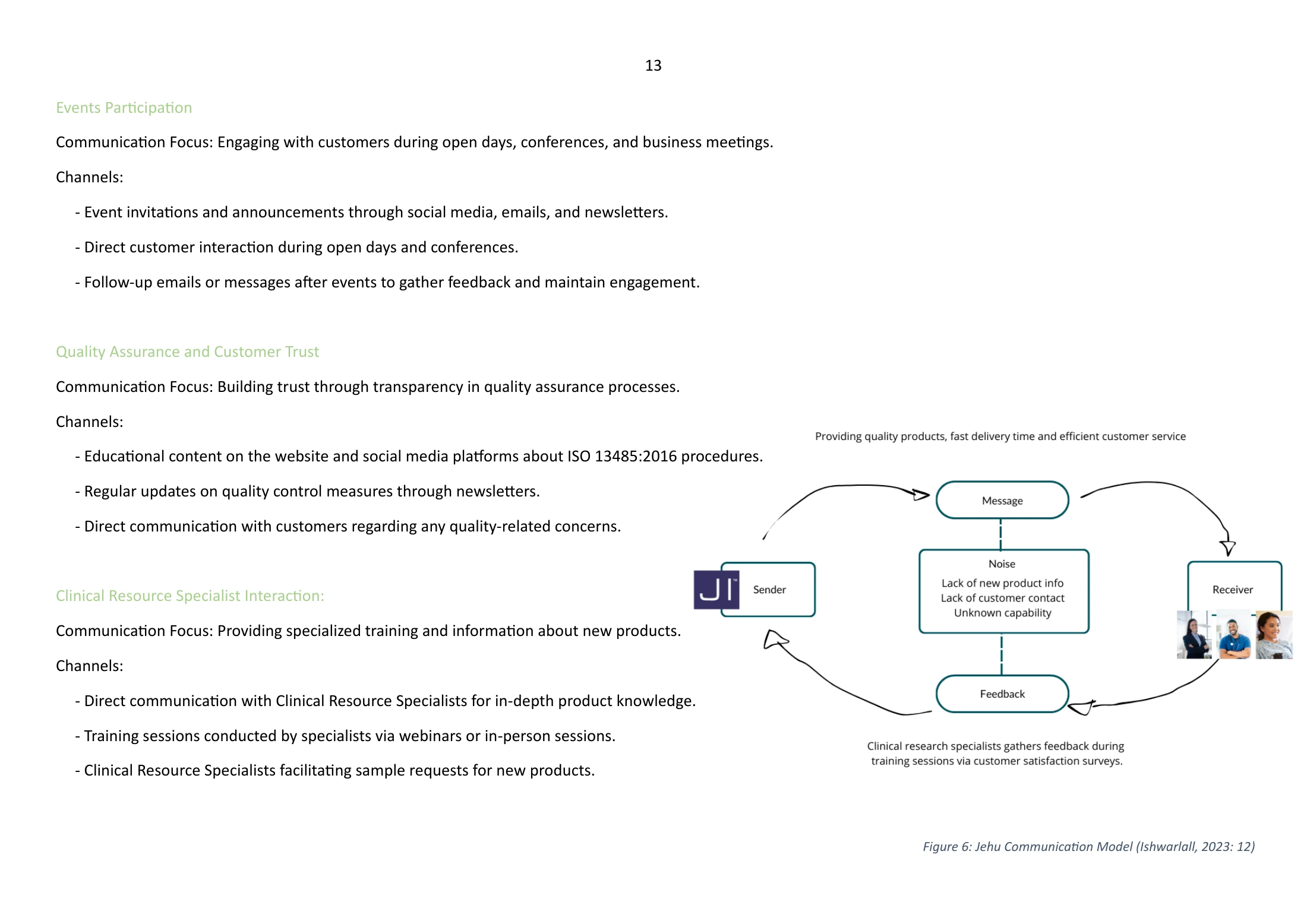
The project distinguished procurement decision makers, clinical users and the people receiving care. It then mapped the jobs of different channels: product details and education, ongoing communication, direct conversations at events, and customer feedback.

Propose one connected system

The proposal links information sheets, digital teasers, newsletters, catalogues, sample handouts and conferences in one communication system. It places design planning alongside input from product teams, printers, event teams and clinical resource specialists.

Make the work visible and repeatable

A phased plan moves from product selection and design into launch communication, print support, event activity and review. The editable version groups this work by quarter. The original proposal identifies Monday.com as a coordination tool.

Define how the proposal would be evaluated

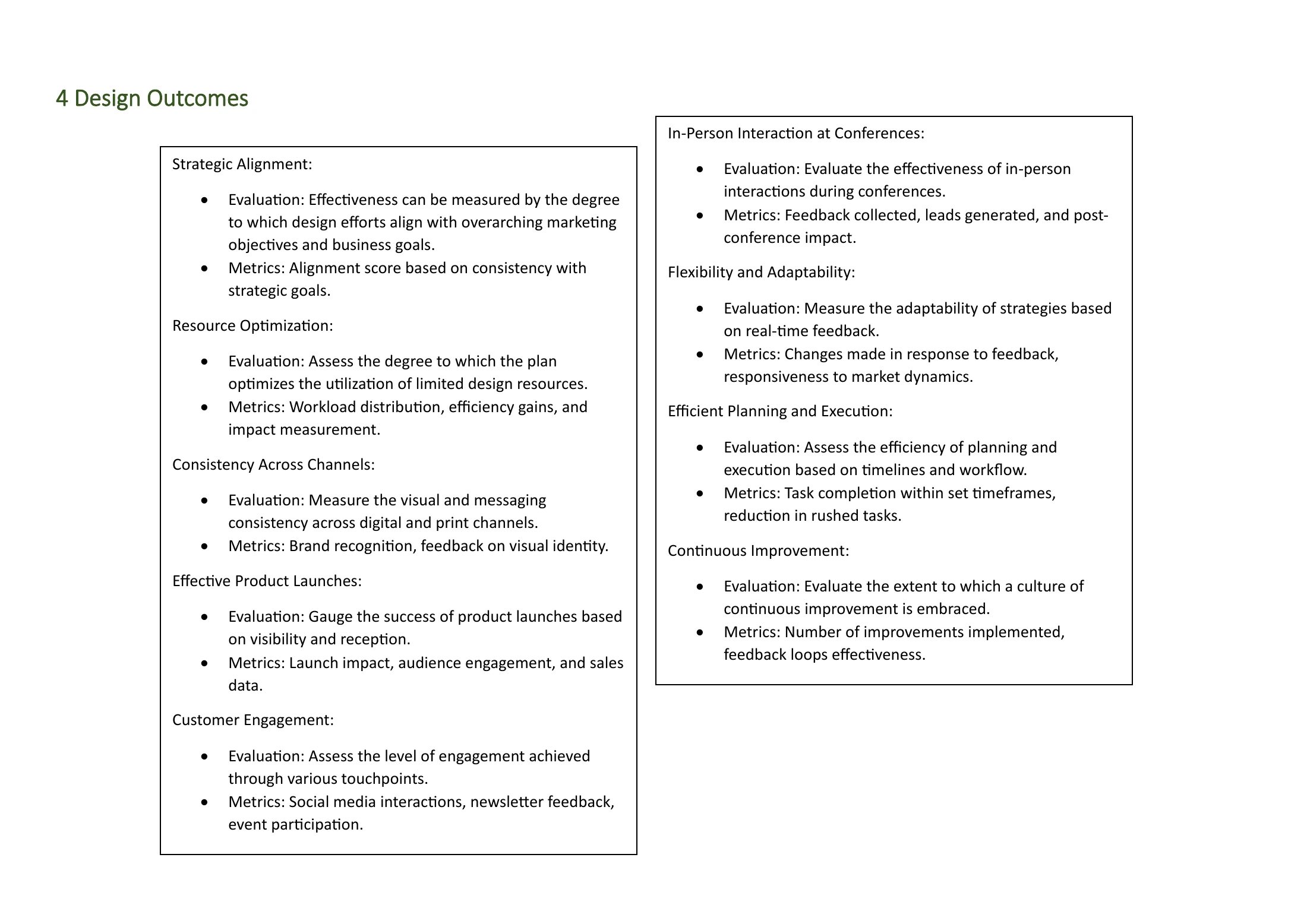
The assessment sets out measures for a future implementation: completion against plans, consistency across channels, customer engagement, event feedback and changes made in response. Review feeds into the next launch cycle rather than ending when the collateral is delivered.

Development and supporting evidence.

The outcome and the next step.

A completed research report and presentation defining a proposed communication system, phased tasks and evaluation criteria. Its contribution is the connection between strategic aims and day to day design delivery. The completed proposal defines the workflow and criteria for a future implementation.

Skills in practice

  • Design research
  • Communication strategy
  • Audience analysis
  • Workflow planning
  • Cross channel planning
  • Evaluation design

Continue exploring

All design research Selected Work Discuss a project

Artwork

Full size